Field Notes, Suggestions for Students
First Time in the Field? Here’s What to Expect and How to Prepare

If you’re considering a career in archaeology, or you’ve just been hired and aren’t quite sure what you’ve signed up for, this one’s for you! Fieldwork is kind of hard to describe until you’ve lived it, but we’ll try our best. Yes, it’s physically demanding and yes, the days are long, but it’s also one of those rare jobs where you go home (or to your hotel room) at the end of the day feeling like you actually did something.
As archaeologists, there are many different reasons as to why we could be out in the field. Depending on the province and the scope of work, we might be working on Historic Resource Impact Assessments or Mitigations in Alberta, Archaeological Impact Assessments in BC, or construction monitoring and post-impact assessments. Read on for an honest account from one of Circle’s newer Assistant Archaeologists of what to expect when you head into the field for the first time:
Going into your first shift, it’s completely normal to feel a little unsure of what to expect. I knew ahead of time that my first day would involve remote work and a fair amount of hiking, but I don’t think I fully understood what “remote” actually meant until I was standing in the middle of the forest in northern Alberta, dropped off by a helicopter. No trails, no signs, no roads. Just the forest and our task ahead. As for hiking, it’s something I did frequently enough and liked to think I was well equipped, but walking through dense bush is a different experience altogether from hiking a well-loved trail. You’re dodging deadfall, pushing through vegetation and trekking on uneven ground. By the end of the first day, I was tired, dusty, and wondering if this work was for me. I got up the next morning making sure to keep a positive attitude and an open mind, and sure enough, by the end of day two, I was excited for day three, and the one after that! I realized, like anything new, it just needed some getting used to. The Supervising Archaeologists told me it typically takes three days to get your “field legs”, and they were right. After a few days, I definitely felt more confident and physically capable of maneuvering through the forest. Once I settled into the change, being out in nature all day started to feel less overwhelming and a lot more grounding. There was one day when the weather was perfect and the sun was shining. It then dawned on me that many people use their weekends and vacation time to go hiking, explore the outdoors and get into nature, but we were getting paid to do exactly that (plus the archaeology of course) – not a bad deal!
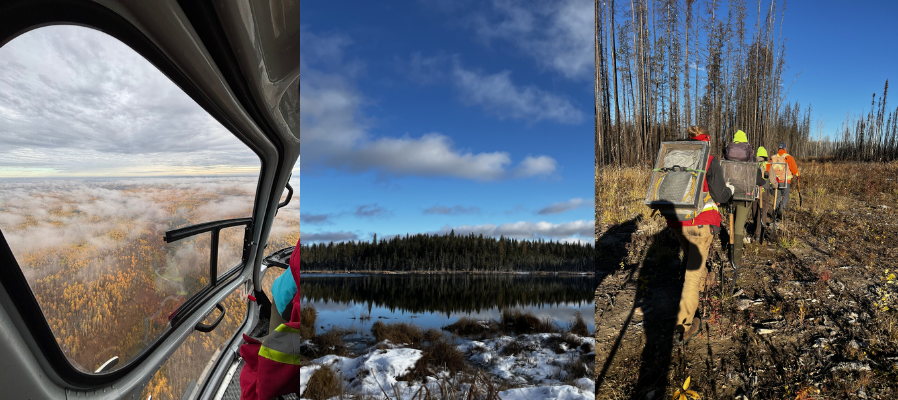
We know that days in the field can be long and physically demanding, but that doesn’t mean they can’t also be exciting. You might be shovel testing, turning up nothing, or you might uncover something that hasn’t seen the light of day in who knows how long. You rarely know exactly what the day will bring (that goes for weather conditions too) and that definitely keeps things interesting. Within my first month and a half, I’d been on a helicopter, rode UTVs, spotted a variety of wildlife, and visited places around Alberta and British Columbia that I probably would have never have seen otherwise. It kind of feels like being a tourist in your own province but in the best way. You get to try new local restaurants, visit nearby museums and spend your days driving through some pretty great scenery.
Speaking of wildlife…what about bears? It’s the first thing most people ask and honestly, it did weigh on my mind early on. However, after finishing my first shift and learning more about bear awareness, I was no longer that worried. A good peace of mind is to remember that bears generally want nothing to do with humans and the key is to make enough noise while you work, which is easy when you’re in a crew. You’ll never be alone in the field and each person carries bear spray at all times. We’ll be posting another blog on bear awareness soon so be sure to keep an eye out if you’d like to learn more. 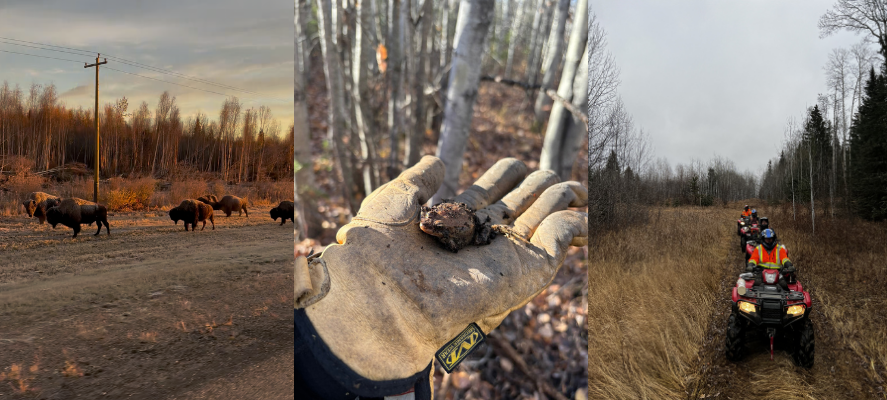
Field Gear
One of the most common concerns for new staff is wondering what they need to buy before their first shift. After scrambling to get what I needed for the field, my honest advice is don’t overthink it and don’t spend a fortune. One of our experienced archaeologists gave me an excellent tip early on, which was to hit a thrift store first. Everything gets dirty, ripped and worn very quickly so there is no need to overspend on performance gear. Of course there will be some things you’ll need to buy new but for the most part, I had a solid base from secondhand finds. It’s also good to keep in mind that long sleeve shirts and full length pants are required in the field.
Thrift Finds
- Sweaters (good for layering)
- Athletic shirts
- Cargo or hiking pants
- Outdoor shells, jackets and pants
- Belt
Buy New
- CSA approved hiking boots and rubber boots with toe protection (both are a must). These are on the pricier side, but a lot of our crew loves the Dunlop rubber boots. Helly Hansen is another good alternative.
- Work gloves (well fitting and sturdy)
Field Backpack
- Choose a pack with chest and waist straps for support and isn’t too bulky as you’ll be carrying it around all day – 30-50L is recommended. As long as it fits lots of water (preferably a hydration pack), your lunch, rain gear and extra socks, you’re good to go! I’ve seen a lot of packs at the thrift but if you want to buy new, Canadian Tire has some good options that aren’t as pricey as outdoor retail stores.
Safety & PPE
Circle provides you with all of the necessary safety training, certifications and PPE for the field. You will get a hi-vis safety vest, safety glasses, a personal first aid kit and bear spray. It is best to wear a belt so you can easily holster your bear spray.
Crew Favourites & Recommendations
- Bama socks – These are worn inside rubber boots and are very worth it in my opinion. They absorb all the moisture and keep your feet feeling dry all day.
- A rain shell – Lightweight and important to keep in your pack because the weather can be unpredictable.
- Head net – Trust me, you’ll want this during the summer when the bugs are out.
- Hydration pack – Much easier than carrying multiple water bottles. Opt for a good quality one because no one wants a leaky backpack.
- Lunch container – Bento box types are a favourite and don’t take up too much space but anything in an enclosed container will do just fine.
Personal Items
Pack what you would normally need when staying away from home but a few extras that make my hotel stays more comfortable are:
Basic kitchenware; a microwave safe bowl, utensils and a can opener can go a long way for easy meals and reheating leftovers. I’ll pack a little bit of dish soap and a sponge instead of buying disposable dishes. If you have any questions about food on the road, we have another blog dedicated to just that!
For downtime during the evenings, I like to bring either my laptop, nintendo switch, some card games or a good book. Any hobby that travels light is worth bringing along! For a typical 10-day shift, I can usually fit everything, including my gear, in a large duffle bag.
If you’re based in Alberta or BC and gearing up for the first time, these stores are great starting points:
- Mark’s – solid choice for footwear and pants
- Mister Safety Shoes – a reliable workwear store
- Canadian Tire – useful for field odds and ends
- Decathlon – great for affordable and functional outdoor clothing
- Dollarama – perfect for small kitchenware and things to take on the road
- Value Village & Goodwill – secondhand clothing
One more thing to add – because this is another common question we get asked – but no, we do not camp out in the woods (lol). Accommodation is always in a hotel, with the occasional stay in work camps. I have yet to stay in one but the general verdict is that they are actually pretty comfortable and the food doesn’t disappoint. Either way, you’ll always have your own room!
Hopefully after reading this, you feel a little more prepared for the field than you did before. If you have an open mind, a sense of adventure and some baseline level comfort with the outdoors, I think you’d take a liking to it just like I did. The only other advice I can give is to take care of yourself by staying hydrated (I like to keep electrolyte packets on hand), eating well, and getting proper rest throughout your shift.
Written by Dheija Mawani-Ford
SHARE THIS:


